Da Vinci CRD, DTR and PAS explained: electronic prior authorization from order to decision
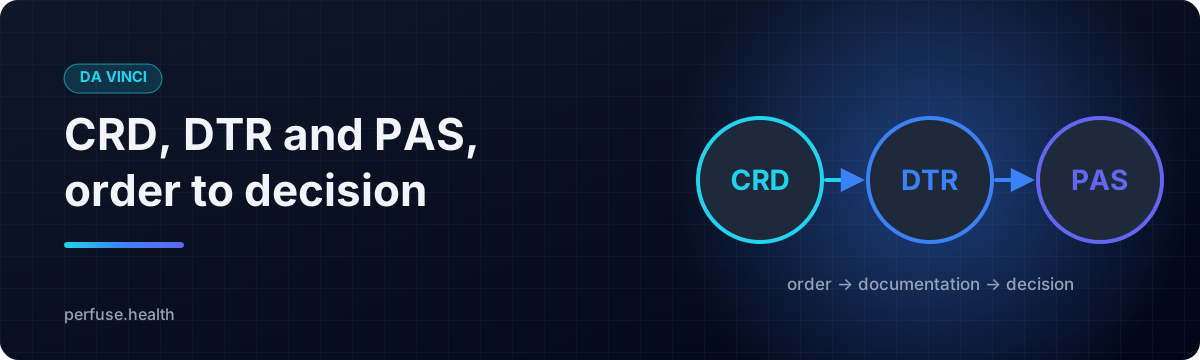
Prior authorization has long meant phone calls, faxes and portals. The HL7 Da Vinci Project replaces that with three FHIR implementation guides that work together inside the clinician's normal workflow:
- CRD, Coverage Requirements Discovery: does this order need prior authorization, and what is needed?
- DTR, Documentation Templates and Rules: collect exactly that documentation, pre-filled from the chart.
- PAS, Prior Authorization Support: submit the request and receive the decision.
Together they make up the Prior Authorization API that CMS-0057-F requires payers to offer from 1 January 2027.
CRD: the answer at the moment of ordering
CRD runs on CDS Hooks. When a clinician selects or signs an order, books an appointment, or starts or discharges an encounter, the EHR calls the payer's CRD service with the order and a prefetch of relevant data such as the patient and coverage.
The payer answers within seconds, while the clinician is still looking at the order:
- whether the service is covered
- whether prior authorization is needed, or already satisfied
- which documentation is required, and which DTR questionnaire collects it
- links to the coverage policy
The answer travels with the order as a coverage-information extension, including a coverage-assertion-id that later steps can refer back to.
DTR: documentation, pre-filled
When documentation is needed, the EHR calls DTR's $questionnaire-package operation on the payer's FHIR server. The payer returns the Questionnaire together with the CQL logic that pre-fills it from the patient's record, and the value sets it uses.
The clinician reviews the pre-filled answers, completes the rest, and the result is a QuestionnaireResponse. Adaptive questionnaires go further: the payer sends one question at a time through $next-question, so each answer decides what is asked next.
PAS: the request and the decision
PAS submits the request as a FHIR Bundle to Claim/$submit. The bundle carries a Claim with use preauthorization, the patient, coverage, provider and the requested services, plus supporting documentation such as the DTR QuestionnaireResponse.
The payer answers with a ClaimResponse: approved, denied, modified or pended. A pended request can be followed with Claim/$inquire, and payers can push the final decision through a FHIR subscription. Under HIPAA the prior authorization transaction is the X12 278, so PAS defines the mapping between the two.
How the three fit together
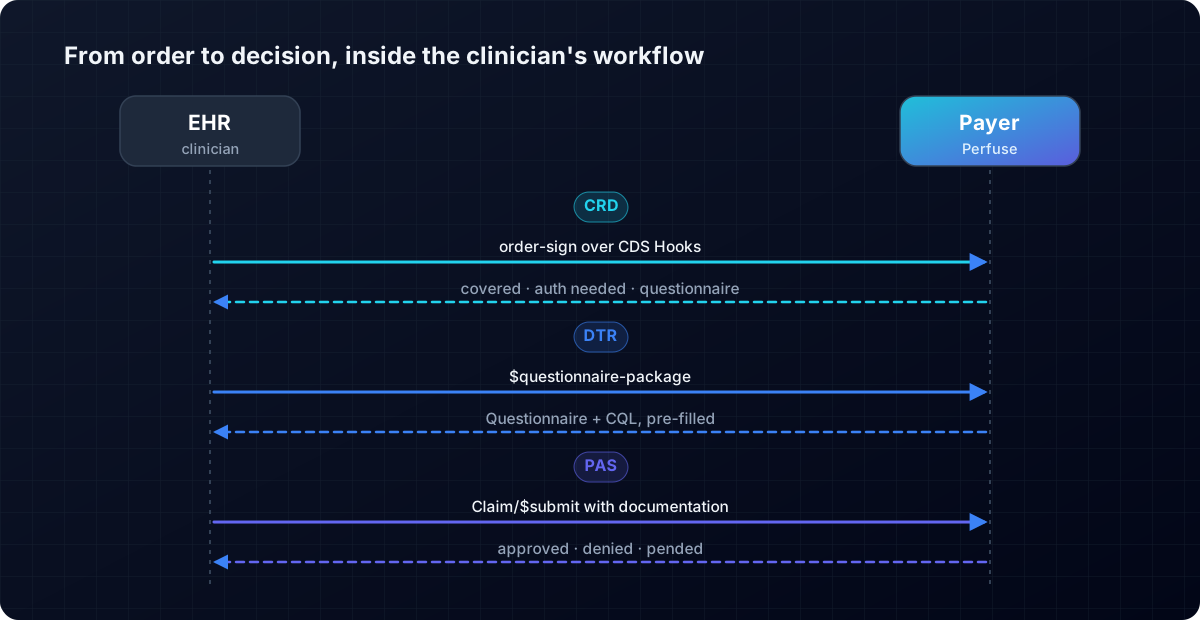
- The clinician signs an order. CRD says prior authorization is needed and names the questionnaire.
- DTR fetches the questionnaire, pre-fills it, and the clinician completes it.
- PAS submits the request with the completed documentation.
- The payer decides. Many requests can be approved in real time, because the documentation the payer needs is already there.
How Perfuse does it
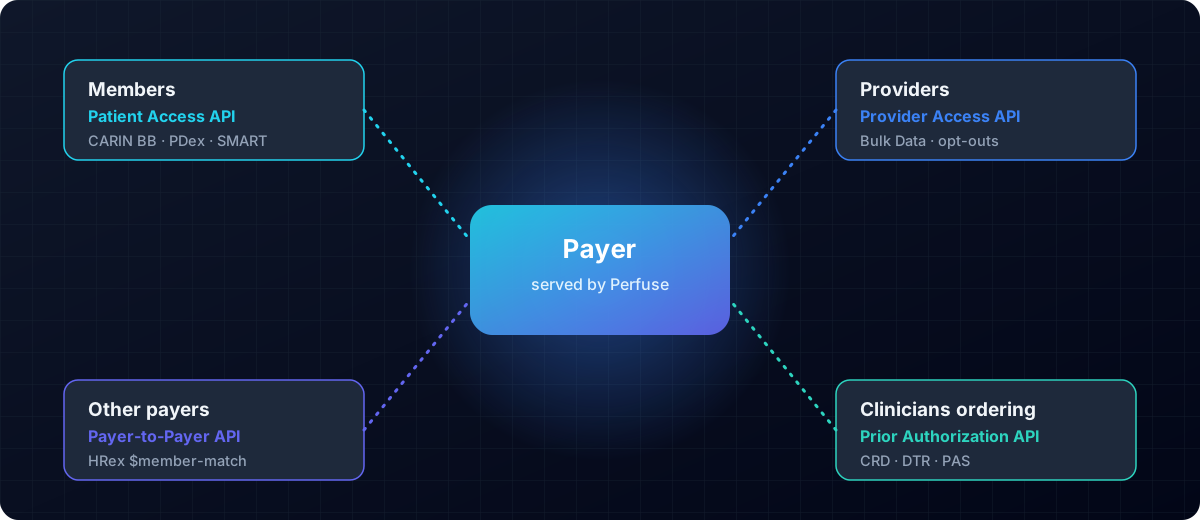
Perfuse is a free, Apache-2.0 healthcare integration engine that implements all three guides, for payers and for the systems that talk to them.
CRD 2.2.1, from a rules file
- A coverage requirements service over CDS Hooks at
/cds-services, started withperfuse serve -crd-rules rules.yaml. - The payer's rules are a plain YAML file: which codes, covered or not, whether prior authorization is needed, which documentation and questionnaire, the reason, policy links, billing codes, contacts and coverage details.
- Every rules file is checked when it loads, so a mistake is reported at once rather than discovered by a clinician.
- Inferno's CRD Server 2.2.1 suite passes.
DTR 2.2.0 questionnaire packages
$questionnaire-packageon the built-in FHIR endpoint, chosen by the order's coverage information, the questionnaire's URL, or CRD's assertion id.- Packages include the CQL libraries the questionnaire pre-fills itself with, and every library those depend on, so the receiving engine has everything it needs.
- Adaptive questionnaires with
$next-question. - Inferno's DTR Payer Server 2.2.0 suite: 43 of 45.
PAS 2.2.1 on either side
- Be the payer: a PAS server with
Claim/$submit,$inquireand a reviewer's$decide, answering from the same rules file as CRD. Pended decisions are delivered by subscription. Inferno's PAS Server suite: 82 of 84. - Be the provider: submit prior authorization requests to payer FHIR APIs from any channel.
- Bridge to X12: PAS is mapped to and from the X12 278, so a FHIR request reaches a payer that only speaks X12, and an X12 decision comes back as a PAS ClaimResponse that passes the official HL7 validator.
- PAS decisions are turned into Da Vinci PDex prior authorizations for the Patient Access, Provider Access and Payer-to-Payer APIs.
Security included
- A built-in SMART on FHIR authorization server that passes Inferno's SMART App Launch STU2.2 suite, 80 of 80.
All of this ships inside the same single binary as the rest of the engine: HL7 v2, FHIR, X12, DICOM and CDA, twenty connector types, a durable queue and a full web console.
Try it
perfuse serve -pas -crd-rules examples/crd/rules.yamlThen point a CDS Hooks client at /cds-services, or send a PAS bundle to /fhir/Claim/$submit. The manual walks through each step.
Related: CMS-0057-F explained.