X12 278 and FHIR PAS: two ways to request prior authorization, and how to bridge them
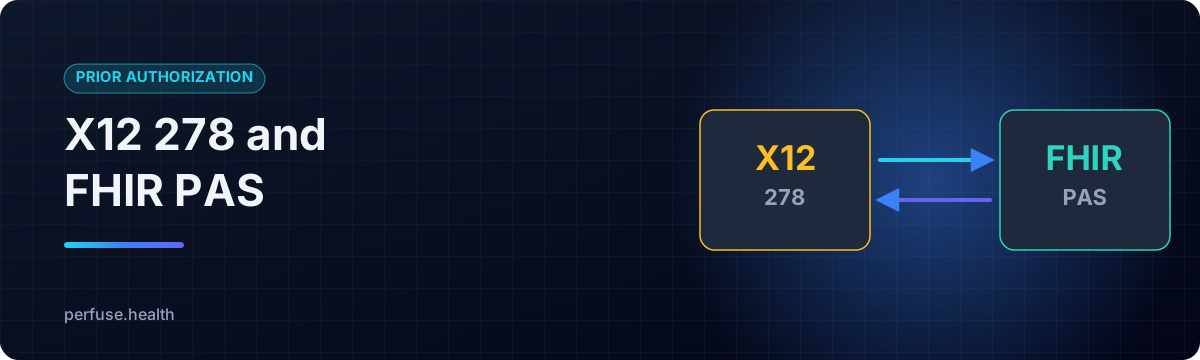
Prior authorization has two electronic standards in the US. The X12 278 has been the HIPAA standard transaction for years. Da Vinci PAS brings the same exchange to FHIR, and it is the standard behind the Prior Authorization API that CMS-0057-F requires payers to run from 1 January 2027.
Most organisations will need both for years to come. This guide explains each one and how to connect them.
The X12 278
The 278 Health Care Services Review is an X12 EDI transaction. A request (the 278 request) carries the patient, the requesting and servicing providers, the diagnoses and the services asked for; the response carries the payer's decision and, when approved, the certification number.
- It is built from segments and loops rather than resources.
- It is the language of payers' utilization management systems and of clearinghouses.
- Supporting documentation travels separately, for example as an X12 275 attachment.
Da Vinci PAS
Prior Authorization Support (PAS) expresses the same request in FHIR:
- A Bundle sent to
Claim/$submit, carrying a Claim with usepreauthorization, the patient, coverage, providers and services. - Documentation attached in the same request, such as the QuestionnaireResponse from DTR.
- A ClaimResponse back: approved, denied, modified or pended, with the authorization number.
Claim/$inquireto check status, and subscriptions so a pended decision is pushed back when it is made.
PAS was designed to sit inside the clinician's workflow alongside CRD and DTR, so a request can often be decided at once because the documentation is already there.
Why both matter
- Under HIPAA, the 278 is the standard for prior authorization between covered entities. CMS has said it will use enforcement discretion for payers that handle prior authorization over FHIR with PAS instead.
- PAS defines its content to line up with the 278, so an intermediary can turn a FHIR request into a 278 for a payer system that only speaks X12, and turn the 278 response back into a ClaimResponse.
- Payers keep their existing utilization management systems while offering the FHIR API CMS requires.
How Perfuse does it
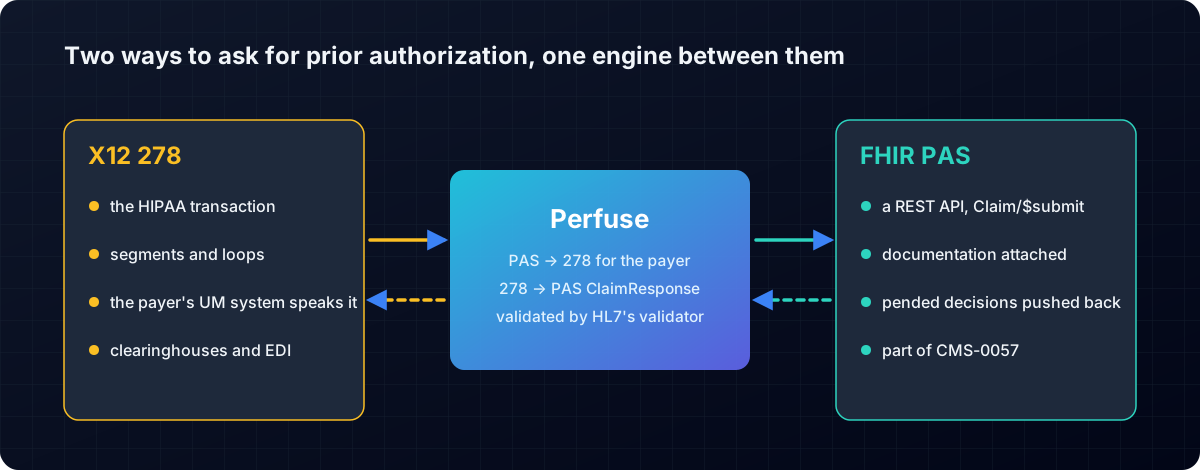
Perfuse is a free, Apache-2.0 healthcare integration engine that speaks both, and converts between them.
X12, parsed as a true structure
- 837, 835, 270/271, 276/277, 834 and 278, with interchanges, groups, transaction sets, loops, segments and qualifiers understood as a structure.
- An X12-to-XML representation for transformation, and back again.
- X12 275 claims attachments in the 006020 form CMS-0053-F adopts, built and read, with C-CDAs signed to the HL7 Digital Signatures guide.
PAS on either side
- Da Vinci PAS mapped to and from the X12 278: a FHIR request reaches a payer that only speaks X12, and an X12 decision comes back as a PAS 2.2.1 ClaimResponse that passes the official HL7 validator.
- Be the payer: a PAS 2.2.1 server with
Claim/$submit,$inquireand a reviewer's$decide, with pended decisions delivered by subscription. Inferno's PAS Server suite: 82 of 84. - Be the provider: submit prior authorization requests to payer FHIR APIs from any channel.
- CRD 2.2.1 and DTR 2.2.0 alongside, so the order, its documentation and the request all have an answer.
- PAS decisions become Da Vinci PDex prior authorizations for the Patient Access, Provider Access and Payer-to-Payer APIs.
And the connections around it: SFTP, HTTP, SOAP, MLLP, databases, Kafka, AMQP and AWS, with a durable queue that keeps every transaction in order and never loses one.
Get started
perfuse serve -pas -crd-rules examples/crd/rules.yamlSend a PAS bundle to /fhir/Claim/$submit, or route X12 278 files through a channel. The manual shows both.
Related: Da Vinci CRD, DTR and PAS explained · CMS-0057-F explained.