 Perfuse
For health plans
CMS-0057-F, prior authorization and the provider directory, ready to run
US health plans in Medicare Advantage, Medicaid, CHIP and the federal exchanges must run four FHIR APIs from January 2027 and answer prior authorization requests faster from 2026. Perfuse has all four, passes the official tests, and costs nothing to license.
CMS-0057-F
The four APIs the rule requires
What it is
CMS-0057-F, the Interoperability and Prior Authorization rule, tells payers to share data with patients, doctors and other plans over FHIR, and to make prior authorization electronic.
Why it exists
Prior authorization by fax and phone delays care. Patients changing plans lose their history. The rule sets deadlines to fix both.
How you use it
Start Perfuse with its FHIR server on, load your members and claims through channels, and open the CMS-0057 screen: it says which APIs are ready and what each still needs.
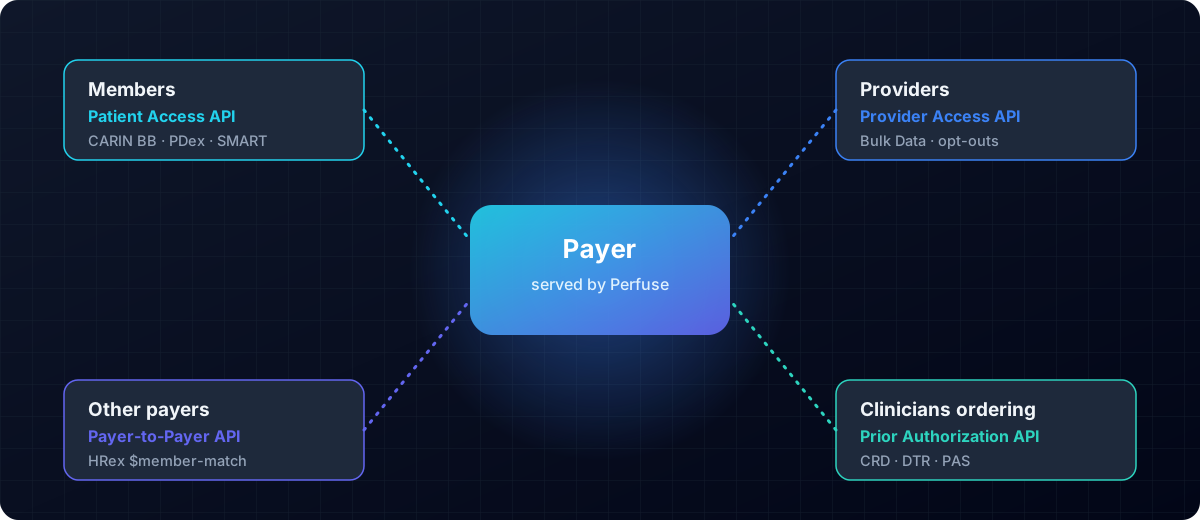
Patient Access
Members see their claims, clinical records and prior authorizations in the app they choose, signed in with SMART on FHIR. Paid claims become CARIN Blue Button 2.2.0 Explanations of Benefit.
Provider Access
In-network doctors fetch their attributed
patients' data in bulk, with Da Vinci's $davinci-data-export, honouring members who opted out.
Payer-to-Payer
A new plan asks the old one for a member's
history: HRex $member-match finds them, and PDex data follows. Inferno's PDex workflow: 19 of 19.
Prior Authorization
Da Vinci CRD, DTR and PAS, from the order to the decision, with the yearly metrics page the rule requires, in CMS's own layout.
Electronic prior authorization
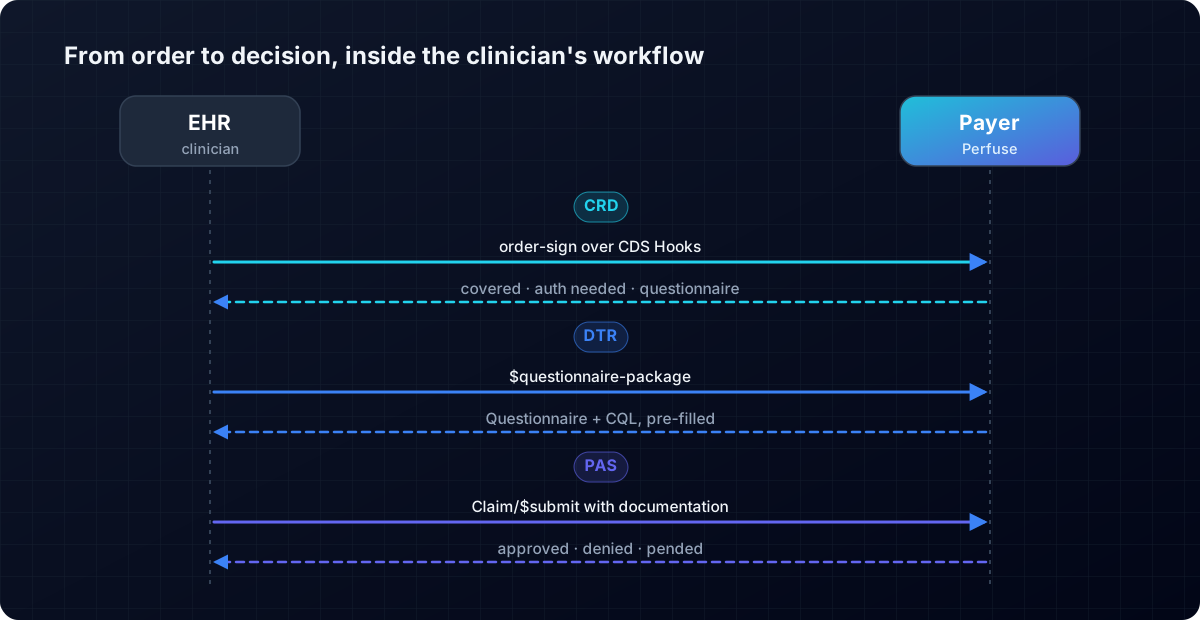
From the doctor's order to the decision, without a fax
Three Da Vinci guides work in sequence. CRD tells the doctor, while ordering, whether approval is needed. DTR gathers the documentation with a questionnaire filled from the record. PAS sends the request and returns the decision.
- A coverage rules file the payer writes in plain YAML, answered over CDS Hooks
- A reviewer's queue in the console: read the request and its documents, then approve, deny or approve fewer units
- Pended decisions sent back by subscription the moment they are made
- The X12 278 converted to and from PAS, so payers on either side are reachable
- Inferno: CRD 92 pass and none failed, PAS 82 of 84, DTR 43 pass and 2 fail
Provider directory
Who is in network, where, and for what
What it is
Da Vinci Plan-Net is the FHIR form of a plan's provider directory: practitioners, their roles, locations, networks, services and insurance plans.
Why it exists
CMS requires plans to publish their directory as an open API, so apps can tell members which doctors near them take their plan.
How you use it
Load the directory through a channel from your credentialing system, and apps search it on the built-in FHIR server.
- Every Plan-Net search, include and reverse chain, for example "practitioners who work at this location"
- Inferno Plan-Net 1.1.0: 199 pass; the 10 left are the test kit choosing its search values (details)
Claims and attachments
The money side, understood as structure
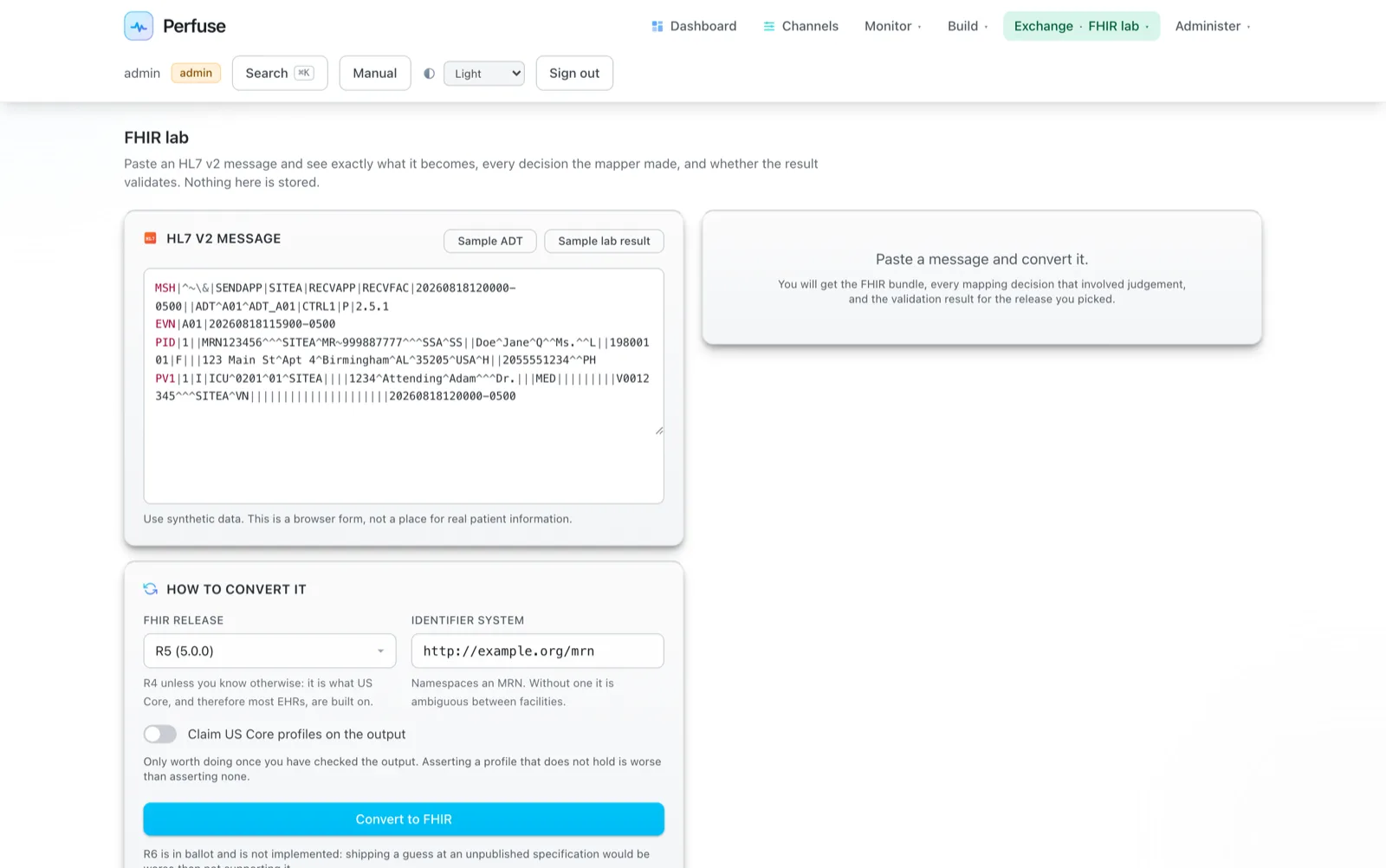
X12 is parsed as loops and segments, not split on punctuation and hoped over.
837 and 835
Professional and institutional claims, and the remittances that pay them, turned into CARIN Blue Button Explanations of Benefit.
Signed attachments (CMS-0053)
C-CDA documents in an X12 275, signed to HL7's digital signature guide and checked on the way in.
Prior authorization metrics
Approvals, denials, extensions, appeals and turnaround times, published as a public page, CSV or JSON.
Eligibility
270/271 eligibility questions and answers, routed and converted like any other message.
Try the payer APIs today
test.perfuse.health runs every API on this page with test data. Point Inferno, or your own app, at it.